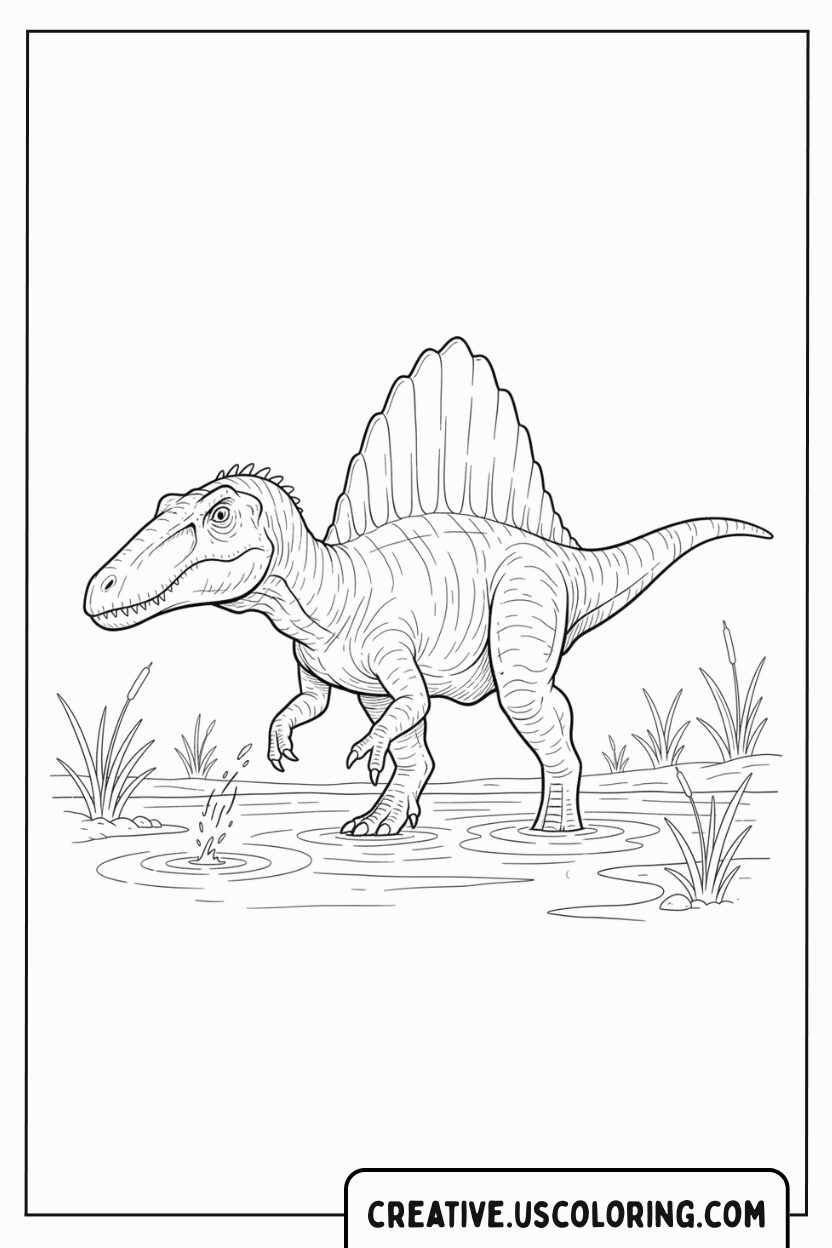
| Title | dinosaur-spinosaurus-wading-in-water-coloring-page |
|---|---|
| Category | Dinosaur |
| Image Size | 89.61 KB (832 × 1248 px) |
| File Format | JPG |
| Available Download | JPG PDF(A4-150 DPI) |
| More | |
| Share |
You can use this work for personal, learning, or editorial projects — just not for profit. It’s covered by a CC BY-NC 4.0 License , and credit is always appreciated
Related coloring pages


About this Dinosaur Coloring Page Spinosaurus
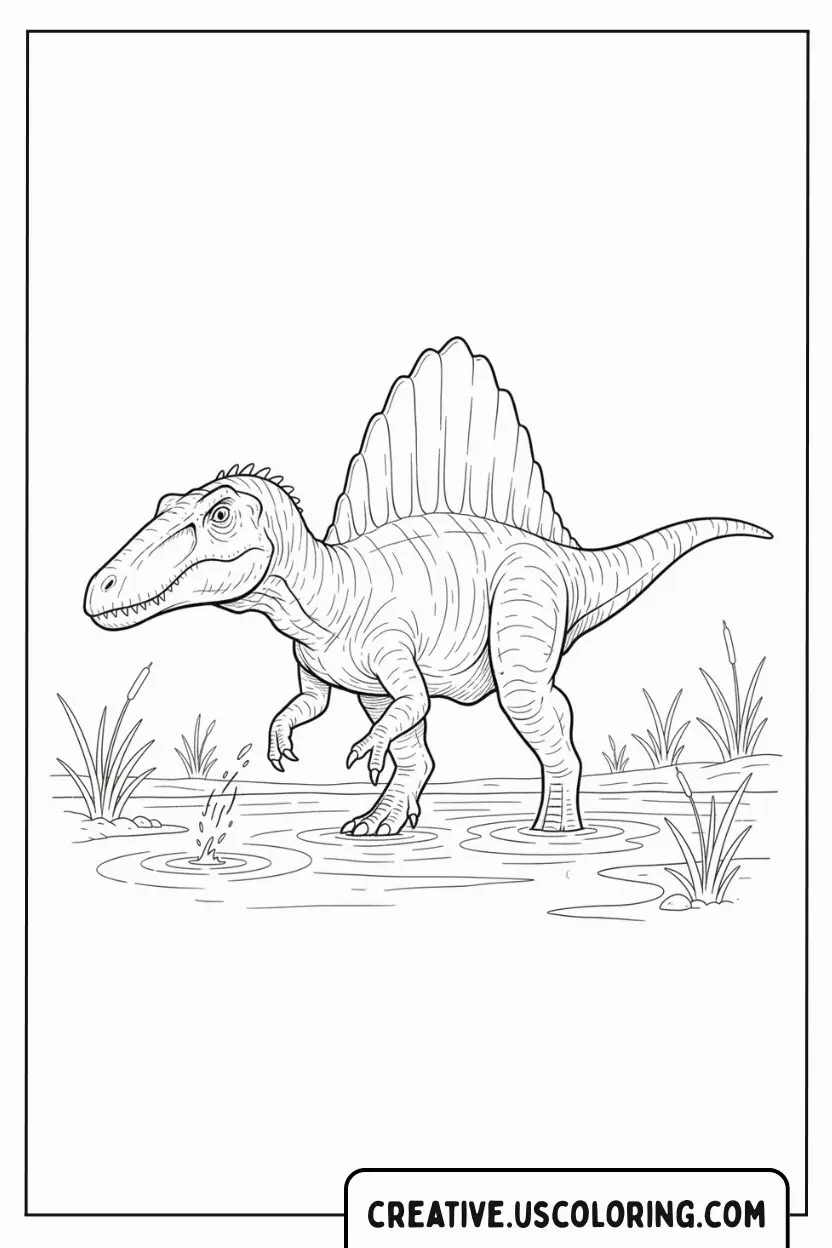
Imagine encountering a dinosaur bigger than the T-Rex, wading through prehistoric swamps! This incredible Dinosaur Coloring Pages Spinosaurus features the massive, sail-backed predator standing in the water, splashing through reeds. With its long, crocodile-like snout and the enormous sail rising from its back, the Spinosaurus was a unique hunter, specialized in fishing. This image captures its dominant presence and the watery, lush environment it inhabited. It’s an open invitation to bring this colossal, aquatic predator to life with vibrant, realistic colors!
Focusing on Aquatic Detail and Scale
Coloring this engaging, detailed scene is a wonderful way to find a moment of patient calm concentration. Focusing on the intricate details—the textured skin, the powerful musculature, the water ripples, and the towering sail—helps to sharpen attention span and provides a therapeutic, mindful break. This activity is excellent for promoting fine motor skills and encouraging creative use of shading to emphasize its massive size and the translucence of the water. Working on this Dinosaur Coloring Pages Spinosaurus offers a relaxing escape that celebrates natural history and the unique forms of aquatic predators.
Muted Scales and Dramatic Sail Tones
To color this magnificent Spinosaurus, you’ll want to use colors suited for a water-dwelling hunter. Its body can be colored in dark, muted shades like dark olive green, deep grey, or mottled brown for camouflage. The massive sail is the key feature: color it in bold shades like red, orange, or a contrasting pattern of stripes to suggest it was used for display or temperature regulation. The surrounding water should be cool blues and greys, while the reeds and plants should be various shades of green to complete this lush, watery landscape.